
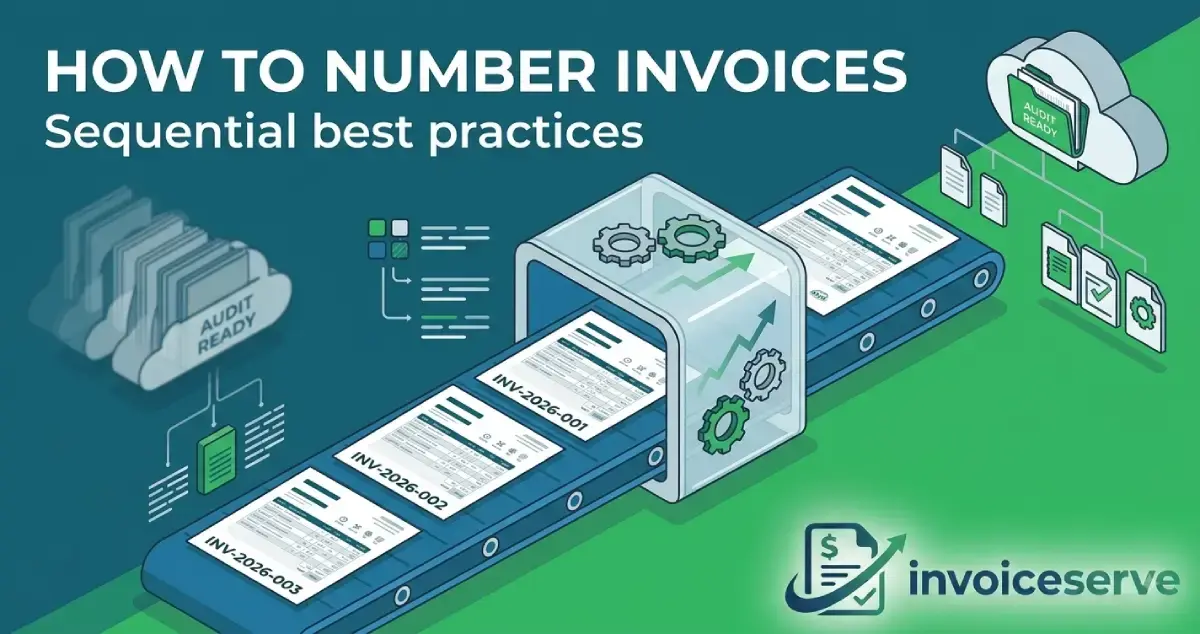
The Core Rules of Invoice Numbering
Must Be Unique: No two invoices should ever share the exact same invoice reference code.
Must Be Sequential: Numbers should progress logically without skipping values (e.g.,
1001,1002,1003). Skipped numbers trigger red flags during tax audits because tax authorities may suspect unrecorded revenue.Never Start with Single Digits: Starting with
1or2looks amateurish and makes searching through digital database queries difficult.
Popular Invoice Numbering Structures
Scheme A: Chronological System (Recommended)
Incorporate the current year or month directly into your invoice code:
Format:
YYYY-MM-001Example:
2026-08-001(First invoice generated in August 2026)Why it works: Instantly tells you when the invoice was issued just by looking at the file name or reference code.
Scheme B: Client-Based Prefix
Assign a unique identifier code to each major client:
Format:
CLIENT-001Example:
ACME-101,ACME-102Why it works: Keeps billing histories organized when managing multiple long-term retainer accounts.
Scheme C: Project-Based Codes
Useful for agencies or freelancers managing large individual contracts with distinct milestones:
Format:
PROJECT-INV-001Example:
WEB-2026-01
Avoid Common Numbering Pitfalls
Don't use spaces or special characters: Stick to hyphens (
-) or underscores (_) instead of slashes (/) or spaces, which can break digital file pathways on cloud storage servers.Pad with leading zeros: Use
001instead of1so your digital files sort correctly in alphabetical order across folder directories.
Build Audit-Proof Invoices Effortlessly
Establishing a clean invoice numbering format keeps your financial records pristine from your very first bill.
Customize your invoice numbers and sequence formats instantly on the Free Invoice Generator.