
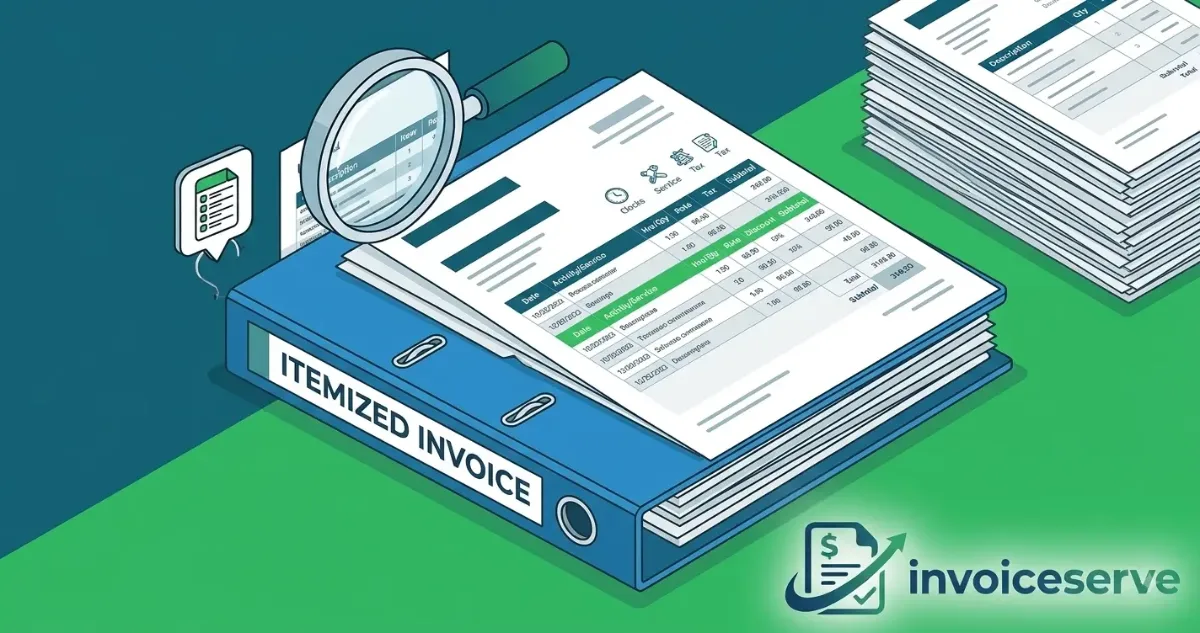
Why Itemized Invoicing Works
Eliminates Client Doubts: Detailed breakdowns answer questions before the client asks them. Clients can see how hourly rates, sub-tasks, materials, and taxes combine to reach the final figure.
Speeds Up Corporate Approval: Accounts Payable teams often reject high-value lump-sum invoices because their internal policies require detailed records for compliance.
Simplifies Tax Deductions for Clients: Business clients need itemized expenses to categorize their corporate tax write-offs accurately.
What to Include on an Itemized Invoice
To create a thorough itemized invoice, break down your charges into these clear components:
Item Name / Service Title: Short, recognizable title (e.g., "Homepage UI Design").
Detailed Description: Brief description of work delivered under that item (e.g., "Includes 3 wireframe iterations and desktop/mobile Figma designs").
Quantity / Hours: Number of units or hours worked.
Unit Price / Rate: Hourly rate or single unit price.
Sub-Total: Total price per line item (
Quantity × Rate).Applicable Discounts or Taxes: Highlight any applied regional taxes (VAT/GST/Sales Tax) or promotional discounts explicitly before the final total.
Create Clean Itemized Breakdown Layouts
Writing itemized invoices manually using basic text tools can lead to math errors and awkward table formatting.
Build clear, detailed line items for your project directly in our Full-Screen Invoice Builder.